

The Middle East and North Africa (MENA) region has been affected by increasing, protracted conflict over the past several years. The instability resulting from this crisis has had significant consequences on the nutrition situation in this region. In 2016, the SMART Initiative conducted a Nutritional Capacity Needs Analysis (NCNA) in MENA countries experiencing ongoing humanitarian crises. Emerging conflict and humanitarian crises have led SMART to expand its services to South Asia.
What came out of the NCNA?
- SMART capacity in the region varied across included countries, with overall capacity in the methodology ranging from medium to low.
- A high volume of nutrition assessments was conducted in certain countries such as Iraq, Jordan, Syria and Yemen; however, most were conducted via external support from technical advisors or external consultants.
- A need to elevate local capacity in the SMART Methodology was identified.
Findings from the NCNA triggered a scale-up of SMART services and capacity building in the MENA region.
What impact do we aim to have?
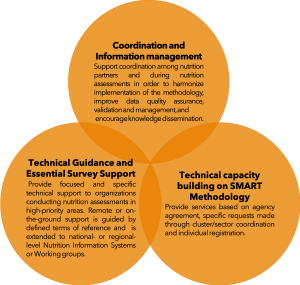
In order to encourage implementation of the methodology, collection of high-quality nutrition data, growth of national capacity and improvement in all stages of existing nutrition information systems (collection, analysis, utilization of data), the SMART initiative has committed to fulfilling 3 key domains.
Timeline of SMART in the Middle East
